

The Different Durations of the Day in the Planets of the Solar System | Festina Lente - Your leading source of AI news | Turtles AI
The Different Durations of the Day in the Planets of the Solar System
Editorial Team30 July 2024
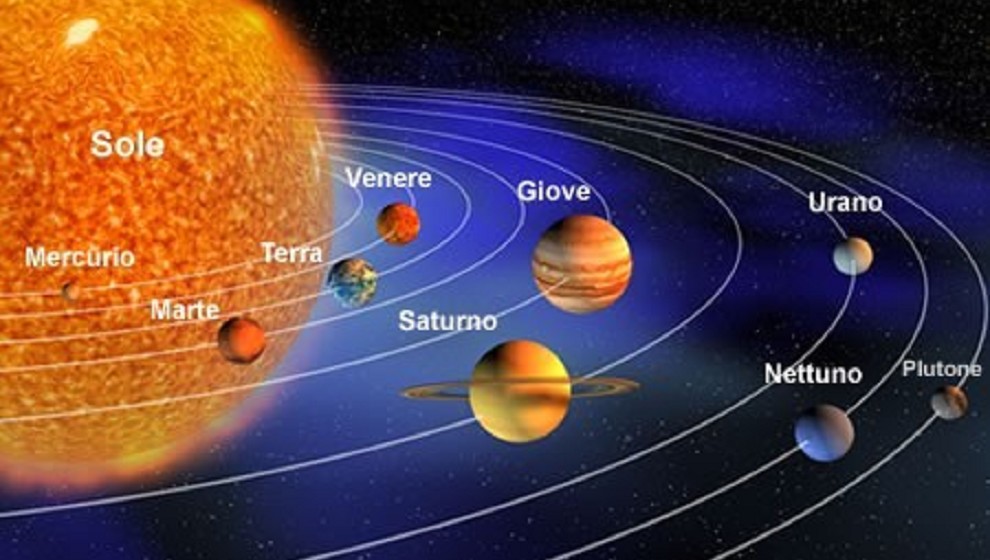
Discover the fascinating differences in the day-night cycle among the various planets in our planetary system
When we think of the length of a day, we generally imagine the complete cycle of light and dark that we experience on Earth, known as the solar day. For our planet, this cycle lasts about 24 hours. However, because of Earth’s elliptical orbit, the length of the solar day can vary slightly, sometimes resulting in a few minutes longer or shorter than the canonical 24 hours. There is also another way to measure a day: the sidereal day, which is based on the time it takes for a planet to complete a full rotation on itself. On Earth, a sidereal day lasts 23 hours and 56 minutes. But how do the other planets in our solar system fare? Let’s find out together.
Mercury and Venus: Eternal Days and Slow Rotations.
Mercury has an incredibly slow rotation relative to its revolution around the Sun. A day on Mercury, or the time it takes for a complete rotation on itself, lasts about 1,408 Earth hours. This means that one Mercurian day is equivalent to about 58 Earth days.
Venus presents an even more peculiar case: a day on this planet lasts 5,832 hours, or 243 Earth days. Interestingly, Venus takes less time to complete its orbit around the Sun, about 225 Earth days, making a Venusian day longer than a Venusian year.
Mars: A Day Similar to Earth’s.
Mars, often called the red planet, has a day length very similar to Earth’s. A day on Mars, or "sol," lasts 24 hours and 39 minutes, making it the planet with the most Earth-like rotation.
Gas Giants: Fast Rotations and Long Years.
The gas giants in our Solar System all have very rapid rotations. Jupiter, the largest among them, completes a rotation in just 10 Earth hours, despite its enormous size. Saturn takes about 11 hours for a complete rotation, while Uranus and Neptune complete their rotations in 17 and 16 hours, respectively.
These planets take much longer to complete their orbits around the Sun-Jupiter about 12 Earth years, Saturn 29 years, Uranus 84 years and Neptune as many as 165 Earth years. As a result, the days on these planets are relatively short compared to their very long years.
Curiosities and Differences
An interesting aspect of planetary rotation is the tilt of the axis. For example, Uranus rotates virtually "lying down" on its axis, with a tilt of about 98 degrees, which means that one of the poles is constantly facing the Sun for part of the Uranian year.
In addition to day length, the composition and structure of the planets also influence their rotation. Gas giants, being composed mainly of gas, have very different rotation dynamics than rocky planets such as Earth, Mars and Mercury.
Conclusion
The length of a day varies significantly among the different planets in our Solar System, offering a fascinating insight into the unique dynamics and characteristics of each. From Mercury with its extremely long days, to Jupiter with its rapid rotation, each planet tells us a different story, enriching our understanding of the universe around us.