

The Secret Nile of the Pyramids | Festina Lente - Your leading source of AI news | Turtles AI
The Secret Nile of the Pyramids
Editorial Team2 July 2024
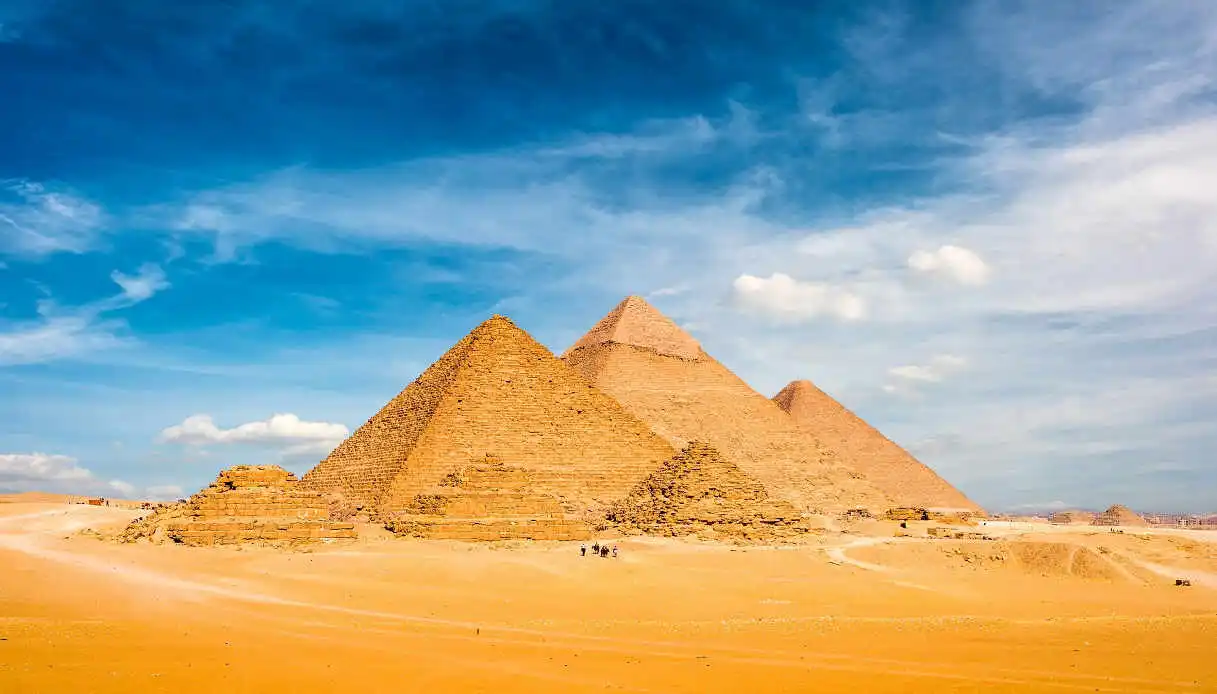
ANCIENT NILE BRANCH DISCOVERED FOR PYRAMID CONSTRUCTION
The question of how the ancient Egyptians managed to erect such extraordinary monuments as the pyramids over 4,000 years ago in the heart of the desert has been the subject of endless debate.
Theories attempting to explain this phenomenon range from the best documented to the most outlandish.
Recently, however, an astounding discovery may clarify this enigma once and for all, revolutionizing knowledge on the subject.
A group of scholars has identified an ancient branch of the Nile, now buried, that flowed along more than 30 pyramids, offering new light on the method of transporting the giant stone blocks used to build the monuments.
This 64-kilometer-long secondary waterway ran alongside the famous pyramid complex and remained hidden beneath desert and cultivated fields for millennia. The discovery of this river explains why the 31 pyramids were erected sequentially along a now-inhospitable strip of desert in the Nile Valley between 4,700 and 3,700 years ago.
Archaeologists had long speculated that the ancient Egyptians took advantage of a nearby waterway to move heavy building materials," but there was a lack of certainty about the location, shape, size and proximity of this river to the pyramid sites," said Eman Ghoneim of the University of North Carolina Wilmington, lead author of the study.
The international team of researchers used satellite radar images to map the branch of the river, named "Ahramat," which means "pyramids" in Arabic. Ghoneim explained that the radar offered them a " unique ability to penetrate the sandy surface and produce images of hidden features, including buried rivers and ancient structures."
Another mystery about the pyramids has been solved.