

The energy swing of AI | Chat OpenAI | OpenAI ChatGPT | ChatGPT 4 | Turtles AI
The energy swing of AI
Power flows that rise and fall like waves, data centers hungry for megawatts and networks under stress: Microsoft, Nvidia and OpenAI are calling for a global agreement to tune software, hardware and batteries to the pace of AI
Editorial Team23 August 2025
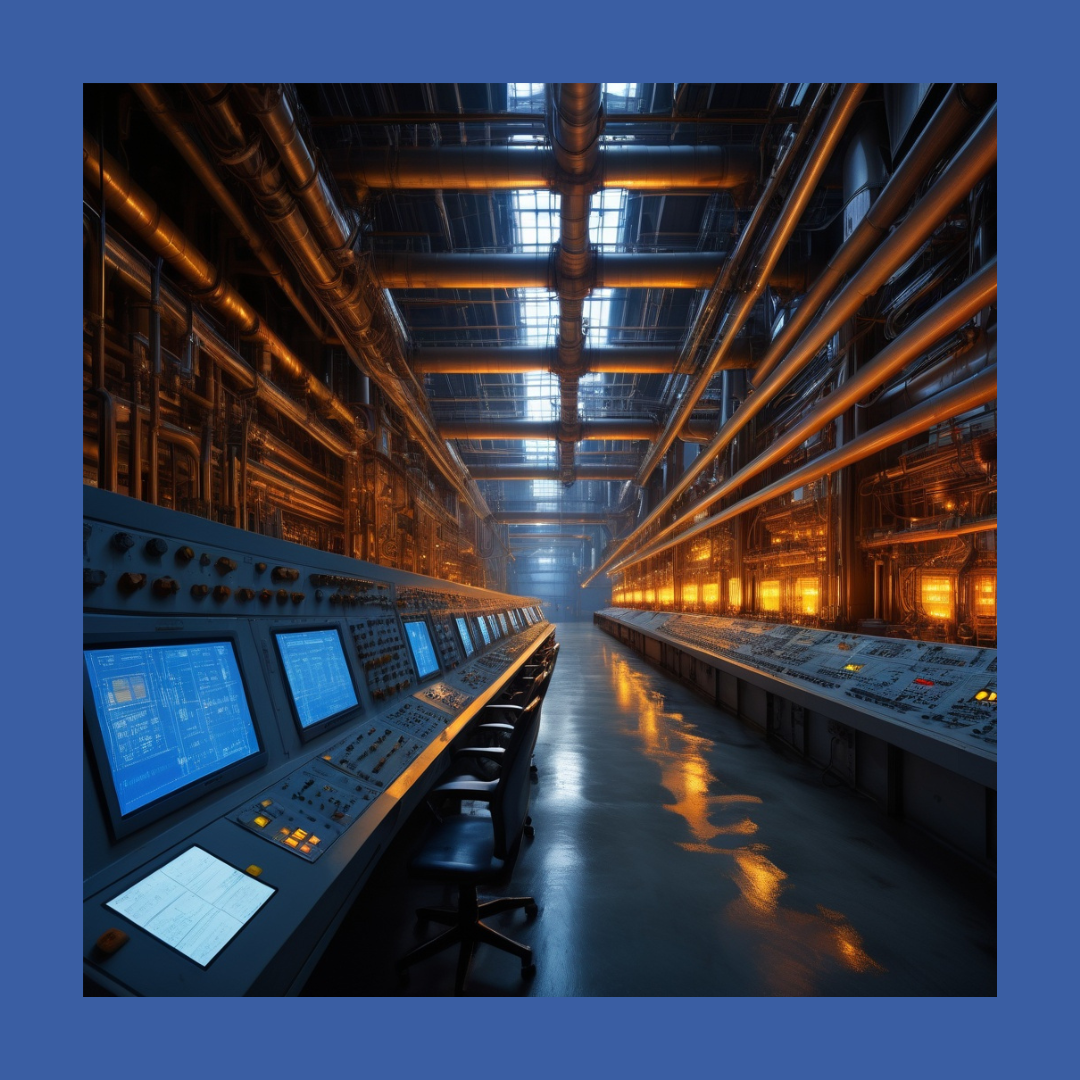
An almost mystical chorus of researchers from Microsoft, Nvidia, and OpenAI is calling for "harmonizing" power consumption during AI training: with GPUs pushing hard and synchronization pauses, the risk is destabilizing the network.
Key points:
- Power fluctuations between processing and communication during AI training can destabilize the network.
- Multi-level solutions are being evaluated: software, GPU firmware, and energy storage.
- Data center and network integration requires shared standards and intelligent telemetry.
- Projections indicate that AI data centers will become a dominant electricity consumer within a few years.
The world of AI, until recently focused on billions of parameters and data streams, is now also discovering itself to be the involuntary director of an energy symphony, albeit one with a somewhat off-key score. A chorus of nearly 60 scientists from Microsoft, Nvidia, and OpenAI has sang a call to software, hardware, infrastructure, utility, and service providers: we need to find a way to "normalize" energy demand during model training, otherwise the power grid risks becoming disrupted. The paper, titled Power Stabilization for AI Training Datacenters, describes a surreal situation: myriads of GPUs, engaged in massive thermal processing, then paused in synchronization to communicate, triggering fluctuations that appear like 50,000 2-kW hair dryers being turned on and off simultaneously, with potential peaks of tens or hundreds of megawatts. The fear? That these oscillations, if in resonance with turbine generators or long transmission lines, could trigger grid instability or even mechanical wear on components. Some providers have already observed harmonic distortions in synchronized loads.
The new disharmonious duet between AI and the grid isn’t a "virtual" problem: Schneider Electric predicts a more fragmented US grid by the end of the decade, while a US report showed that data centers consumed approximately 4.4% of the nation’s total energy in 2023, with estimates indicating a jump to 6.7–12% by 2028. Other studies estimate that global data center demand will double by 2030 to approximately 945 TWh, driven largely by AI. Furthermore, the energy requirement for each training run could reach 1 GW in 2028 and 8 GW in 2030, numbers that could threaten the boundaries of the grid as we know it.
But researchers aren’t limiting themselves to raising cosmic alarm: they propose a triad of strategies, each with advantages and limitations. On the software front, there’s talk of "secondary loads" activated when the GPU is idle: useful for smoothing power consumption, but it can slow down, require cloud-client coordination, and be unreliable. At the GPU level, firmware such as "power smoothing" in the Nvidia GB200 allows you to set minimum thresholds and control the rate of increase or decrease in power demand, provided you accept extra consumption. Finally, at the datacenter level, batteries and local storage systems can smooth out peaks, avoiding disrupting the network, albeit with significant installation costs.
Rather than favoring one path, the researchers suggest a symphony: combining all three strategies, or rather, making them communicate with each other. Coordination is needed so that racks, GPUs, and storage systems can "talk" to each other, signal the load status, and adapt accordingly. AI algorithm developers should work on asynchronous, consumption-aware training, utilities should publish grid resonance and response specifications, and standards should be created for telemetry, control, and oscillation mitigation.
In parallel, real-world solutions continue to gain traction: initiatives like DCFlex, promoted by EPRI and supported by Google, Meta, Microsoft, Nvidia, and Oracle, are testing data centers equipped with load flexibility and intelligent UPSs to smooth out power peaks and respond to electrical emergencies. Proposals also include flexible storage to align consumption with renewable sources or local storage that releases energy during times of high demand. And there’s no shortage of imaginative approaches: modular nuclear power or kinetic batteries like those from Revterra, which maintain stable grid frequency, can contribute to resilience. McKinsey and the IEA also emphasize the need for simultaneous investments in electrical infrastructure, efficient data centers, and dialogue between the technology and energy sectors.
And while data chases the laws of physics, and GPUs train in sync like a fanfare of power, the call is for a new pact: between technologists, electrical engineers, network managers, policy makers, cloud providers, and AI architects.
In this process, the challenge is not just to grow, but to do so with energy awareness, harmonizing so as not to rattle the foundations or the fuses.