

Surya, IBM and NASA’s Open-Ended Solar Art | Festina Lente - Your leading source of AI news | Turtles AI
Surya, IBM and NASA’s Open-Ended Solar Art
When the Sun plots storms, IBM and NASA steal its secrets: an AI that scrutinizes its whims to warn us before satellites stumble and the Earth is left in darkness
Editorial Team20 August 2025
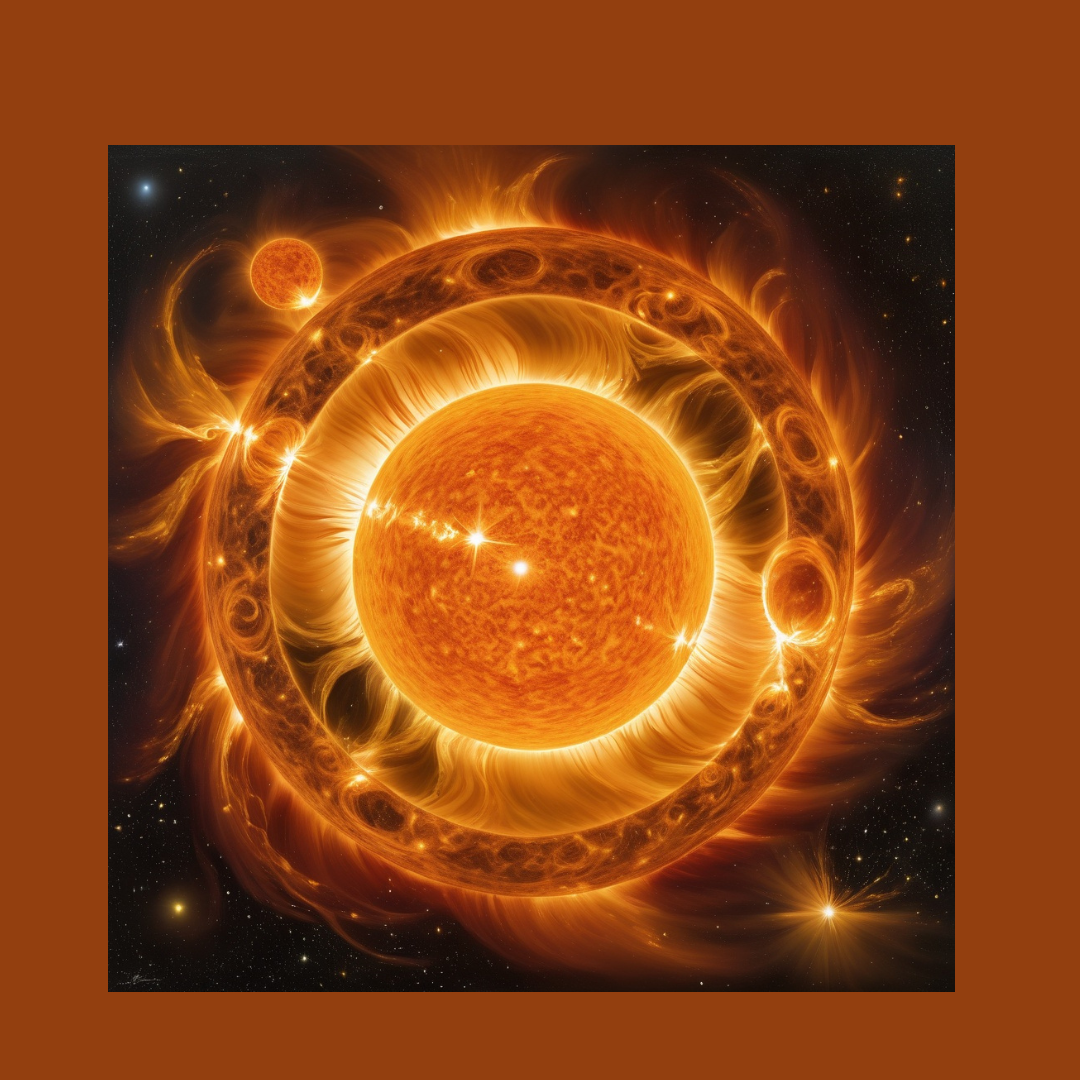
Surya, the open AI born from a collaboration between IBM and NASA, draws on nine years of high-resolution solar images to predict solar storms. Available on Hugging Face, it offers powerful forecasting for flares, CMEs, and space weather.
Key Points:
- Open-source heliophysics model, trained on nine years of SDO data
- Improves flare classification accuracy by 16%
- Upgrades to Hugging Face, GitHub, and TerraTorch with the SuryaBench benchmark set
- Allows now-casting and fine-tuning for specific solar events
Imagine a silent, tireless observer who has been scrutinizing the Sun for nine years, capturing every smirk, every glow: this is the soul of Surya. IBM and NASA created it not to celebrate science, but to harness it: a foundational AI model that transforms petabytes of solar imagery from the Solar Dynamics Observatory (SDO) into useful premonitions, predicting storms capable of disrupting GPS, satellites, power grids, and communications.
The result? An algorithm that improves solar flare classification by 16%, anticipating them up to two hours earlier. A significant margin when the Sun decides to shake the Earth and its infrastructure. Surya is not a closed monolith: it weighs little, it is open, and it can be found on Hugging Face, GitHub, and even the TerraTorch library, ready to be customized, adapted, and refined by scientists, students, and startups around the world.
At the end of the model is SuryaBench, a collection of datasets and benchmarks designed to standardize comparisons between forecasting methods: a "bridge to the scientific community," to use a narrative metaphor, which simplifies the race to forecast flares, extreme UV outbursts, solar winds, and geomagnetic indices such as Kp and Dst.
Behind the scenes, the project is the result of a strong interdisciplinary alliance: NASA (Office of the Chief Science Data Officer and Heliophysics Division), the IMPACT AI team from the AI for Science mission, and the talent of IBM Research. The project, structured according to NASA’s "5+1" strategy for AI, went from concept to release in less than a year: a timeframe that resembles a rocket rather than conventional processing.
In the Sun’s variable universe, where sunspots become the epicenters of invisible cataclysms, Surya is capable of "self-learning" solar rotations, magnetic fields, and geometries, demonstrating that leaving the model with pure data rather than codified rules yields better results.
The sky is no longer just a spectacle to be admired: it becomes a premise, a warning, a responsibility. The barrier thins for regional scientists, university laboratories, and startups: Surya lowers the technical barrier and opens the way to reproducible science, common benchmarks, and low-resource adaptations.
To use Surya, simply grab the model on Hugging Face and give it a try: SDO data preprocessing, light fine-tuning with adapters or LoRA, evaluation on the SuryaBench benchmark, lead time measurement against forecasting standards, and above all, stress testing on extreme events, like a live laboratory under the sun.
Yet the narrative remains open, not drawn in a straight line: a work that speaks ironically to the technical reader and narrator, combining technical details and metaphors: Surya is a mirror, a chisel, an oracle, but it doesn’t pronounce judgments, it opens up patterns.
