

When the algorithm plays the little Archimedes | Festina Lente - Your leading source of AI news | Turtles AI
When the algorithm plays the little Archimedes
Ai inventing experiments that seem alien scarabocchi but make gravitational wave detectors work better, simplify quantum entanglement and reveal hidden symmetries, while physicists remain halfway between babysitters and detectives
Editorial Team18 August 2025
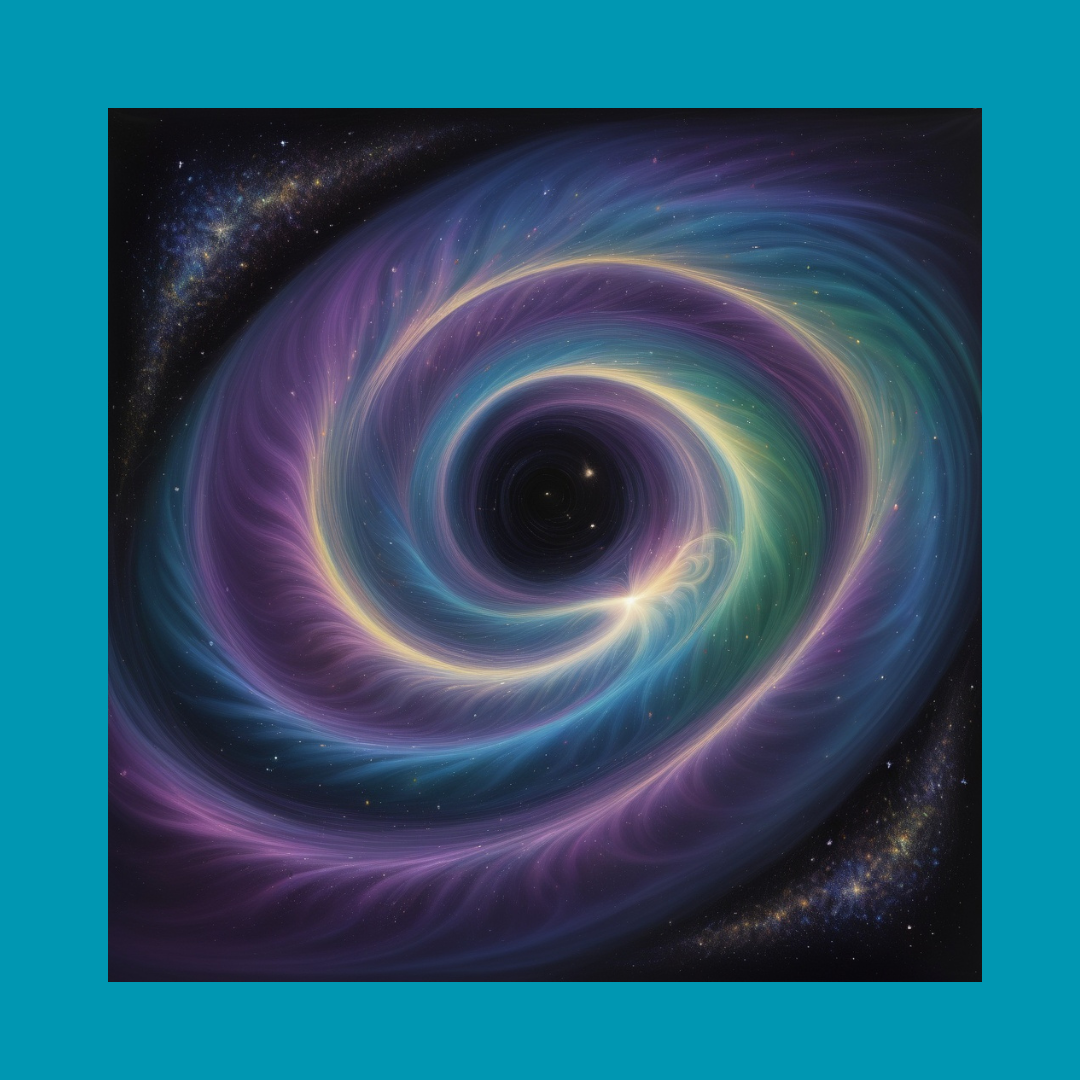
L’AI, pur richiedendo supervisione umana, ha ideato configurazioni ottiche per LIGO talmente esotiche da sembrare aliene però funzionanti, potenzialmente incrementando la sensibilità del rilevatore del 10-15 %. Similar approaches also apply in quantum, physics of particles and dark matter.
Key points:
- AI designed an additional 3 km additional optical ring to reduce quantum noise, improving the sensitivity of Ligo by 10-15 %.
- The "Urania" algorithm has identified dozens of non -conventional experimental topologies for gravitational detectors, with potential earnings up to ten times.
- In quantum physics, software such as Pytheus has simplified the configuration for the exchange of entanglement, making it more understandable and achievable.
- Ai is also emerging in identifying symmetries and in formulating new equations but the interpretative leap remains entrusted to human intelligence.
Imagine AI as an extravagant inventor: without aesthetic preconceptions, mix lenses, mirrors, laser in surreal configurations. When Caltech’s physicists, led by Rana Adhikari, allowed an algorithm derived from the works of Mario Krenn to explore the enormous space of possible interferometric architectures, the result was... a chaos. Optical nodes in series, intricate paths, zero symmetry. However, behind that chaotic appearance was hidden an effective solution: a three kilometer optical ring intertwined between the car arms, an trick that multiplied the sensitivity of gravitational wave detectors. An apparently crazy idea, but which would have added, from the beginning, a significant gain of 10-15 % in the precision of Ligo.
Another remarkable progress is the Urania system: one which reformulates the problem of design as a continuous optimization exercise, exploring configurations from scratch. The results are surprising: completely unpublished topologies that also exceed the "Next-Gen" human models, promising a leap up to ten times in the sensitivity of detectors. To accompany this discovery, a public "zoo" of over fifty peak design destined to inspire future experimental studies.
At the same time, in the quantum field, tools like Pytheus proved to be revolutionary. Starting from graphs that represent possible experimental configurations (dividers of bundle, photons and so on), the AI has found much simpler versions of complex experiments, for example the exchange of entanglement according to Zeilinger simplifying them and making them understandable thanks to clear mathematical steps. In China, already in December 2024, the team led by Xiao-Song but confirmed the practical feasibility of this simplification.
And it does not end here: the AI also makes a plow in the data ground. In physics of particles and cosmology, Machine Learning models have extracted symmetries such as those of Lorentz directly from experimental data, without theoretical instructions. Or, as in the case of Kyle Cranmer, have identified new functions of density of the dark matter more adhering to data, although without a clear human explanation (for now).
In Bologna, astrophysics Elena Cuoco, today at the University of Bologna, uses machine learning to separate signals from noise in gravitational data, perfecting the quality of data for Einstein Telescope.
The story is clear: the algorithm is the chest of radical ideas; The human being is the interpreter that translates them into real tools. No triumphalistic declaration, only the evidence of a collaboration that enriches the tools of science, refining our ability to probe the universe - in the infinitely small quantum, both in the rippled spacetime of the gravitational waves.
