

AI Learns to Hear: The Era of Empathy in Language Models | ChatGPT app | Chat GPT login free | ChatGPT 4 | Turtles AI
AI Learns to Hear: The Era of Empathy in Language Models
From new benchmarks to LAION’s open source, the focus shifts to emotional skills: models surpass humans in psychometric tests and learn to interpret emotions from voice and face, between potential and ethical risks
Editorial Team25 June 2025
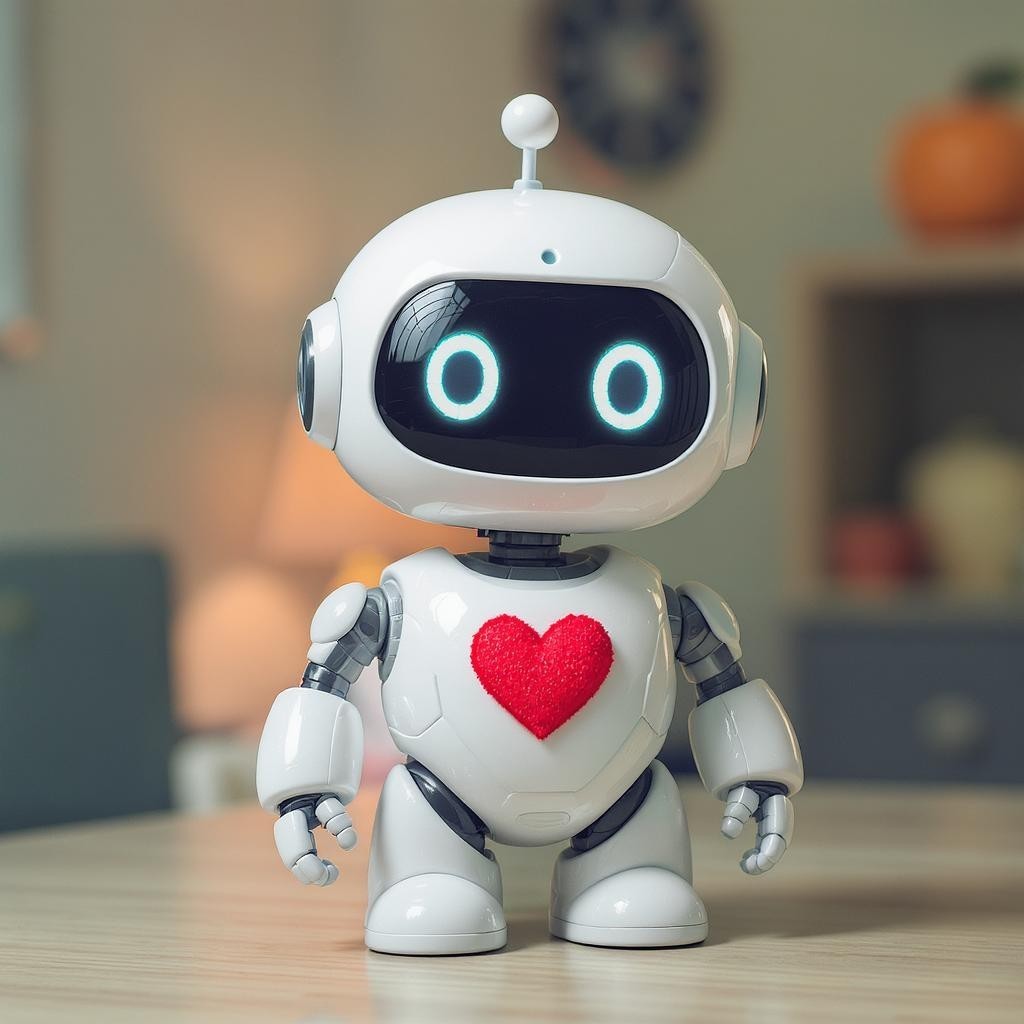
LAION’s release of EmoNet, along with benchmarks like EQ-Bench, highlights how AI is targeting emotional skills: from facial/voice recognition to the ability to reason about emotions in social contexts.
Key Points:
- EmoNet offers face/voice models with 40 emotions and validated synthetic datasets.
- EQ-Bench 3 assesses social EQ in LLM via role-play, with advances in OpenAI and Gemini.
- Studies (Bern) show LLM ~80% vs. humans ~56% in emotional psychometric tests.
- Challenges: Risk of manipulation if EQ is poorly targeted; EQ can also contain conversational biases.
LAION, in partnership with Intel, has made available EmoNet, an open source suite that goes beyond simple emotional recognition: it includes EMONET‑FACE (40 categories, synthetic dataset of 203k images), EMONET‑VOICE (4,692 clips – high-quality voice benchmark) and Empathic Insight models capable of estimating emotion in photos and audio. In particular, in EMONET‑VOICE tests, Empathic Insight‑Voice Large models outperform Gemini2.5Pro and GPT‑4o, with Pearson correlations above 0.42 and lower mean squared error.
Meanwhile, benchmarks such as EQ‑Bench 3 — which assesses emotional intelligence in complex social scenarios through LLM-judged role-play — report a clear improvement in the last six months on OpenAI and Google Gemini2.5Pro models. The platform measures eight key dimensions, including empathy and insight, to generate an Elo score indicative of the model’s overall emotional competence.
Academic research – such as that of the University of Bern – has shown that models from OpenAI, Microsoft, Google, Anthropic and DeepSeek average over 80% in psychometric tests on emotional understanding, compared to 56% achieved by humans. A sign that AI is closing the gap in socio-emotional skills.
However, this increased emotional sensitivity raises ethical questions: the risk of manipulative behaviors, such as automatic flattery (sycophancy) observed in GPT-4o, can increase if the model exploits emotion without balance. According to Sam Paech, developer of EQ-Bench, a more refined EQ can also help recognize and correct dysfunctional and deviant emotional dynamics.
Christoph Schuhmann (LAION) argues that democratizing this technology – currently the preserve of large centers – will allow independent developers to advance the field without sacrificing ethics. The stated goal is to create AI assistants that not only understand emotions, but are able to use them constructively: “I see them as guardian angels or emotional counselors,” able to help you when you’re feeling down and worry about your mental health in much the same way you measure weight or glucose.
The shift toward emotional intelligence represents a departure from the traditional emphasis on analytical reasoning: progress in EQ, open source availability, and sophisticated benchmarks show that EQ could become crucial to user preference and adoption of AI. Furthermore, tools like EMONET-VOICE offer an unprecedented level of emotional assessment, with large-scale human psychological annotations to refine even more “sensitive” models. The potential risks – manipulation, emotional dependencies – however, highlight the need for careful training, which balances rewards and behavioral limits, avoiding the emergence of unduly persuasive strategies.
The focus on emotional intelligence is becoming a central element in the development of AI, with open source tools and public benchmarks that enhance its diffusion, provided that an ethical balance is maintained in its use.
