

Red Mystery in the Ice: The Secret of the Blood Falls | Festina Lente - Your leading source of AI news | Turtles AI
Red Mystery in the Ice: The Secret of the Blood Falls
A spectacular phenomenon that paints Antarctica red and reveals the hidden wonders of extreme nature
Editorial Team30 December 2024
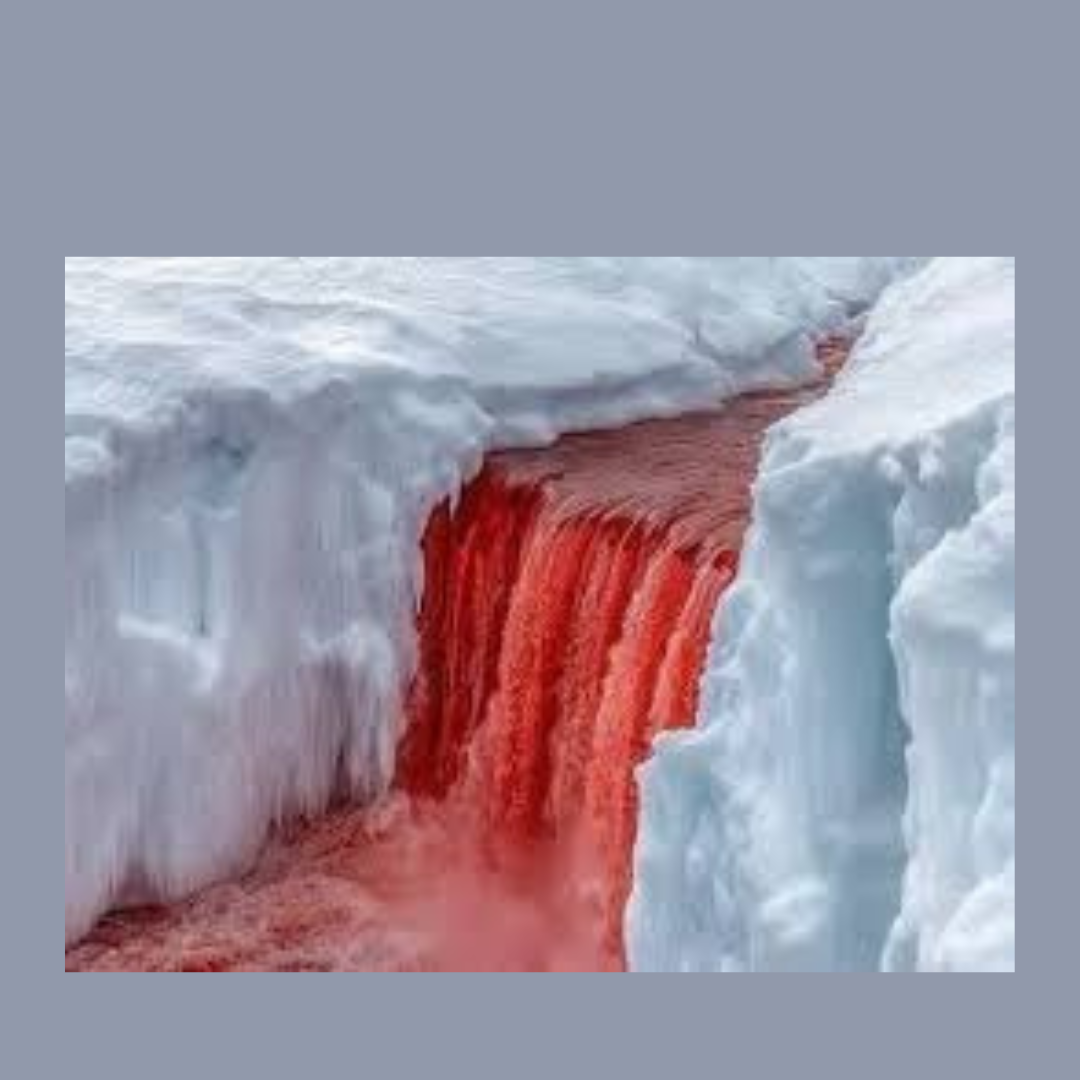
An extraordinary natural phenomenon that seems to defy imagination lights up the ice of Antarctica: the Blood Falls. Let’s discover together the mystery behind these spectacular and unusual red waterfalls.
In the heart of Antarctica, a remote and seemingly inhospitable corner of our planet, there is a phenomenon capable of capturing the attention of scientists and the curious from all over the world: the famous Blood Falls. These fascinating red flows, which emerge from the icy surface of the Taylor Glacier, do not represent a wound in the landscape but an intricate natural process, whose secret has been revealed thanks to decades of research. Their origin dates back to a discovery made during a British expedition in 1911, when the first explorers were stunned by this unusual sight. Although the name evokes macabre images, the red flow has nothing to do with blood: it is the result of the interaction between the salt water, rich in iron, and the external environment.
Thanks to advanced studies conducted in 2006 and 2018, researchers were able to identify the true essence of the phenomenon. The analyses, carried out with electronic microscopes, revealed the presence of microscopic nanospheres composed mainly of iron, but also enriched with other elements such as silicon, calcium, sodium and aluminum. These particles, so small that they are hundreds of times smaller than a human red blood cell, are the legacy of ancient microorganisms that inhabited the area millions of years ago. Trapped under layers of ice and surviving in an extreme environment devoid of light and oxygen, these tiny beings have helped create a one-of-a-kind ecosystem.
When the brackish water, which slowly flows from these frozen depths, comes into contact with oxygen and sunlight, an oxidation process is activated. The iron contained in the nanospheres is chemically transformed, giving the flow that unmistakable red color. The effect, similar to a natural paint flowing on ice, is further amplified by the particular chemical composition of the particles. But it is not just a visual spectacle.
The scientific implications of the Blood Falls go far beyond their beauty. This extraordinary environment offers scientists a model for understanding how life can adapt and thrive in extreme conditions, similar to those of other planets or moons in our solar system. The idea that microorganisms can survive in such prolonged isolation and in such a harsh context raises new hopes in the search for extraterrestrial life.
The Blood Falls remind us that even in the coldest and most seemingly hostile places, nature never ceases to amaze us with its incredible capacity for adaptation and beauty.