

GPT models explained in simple words | Free ai Courses | Best Free Generative ai Tools | Generative ai Financial Services Mckinsey | Turtles AI
GPT models explained in simple words
DukeRem16 March 2023
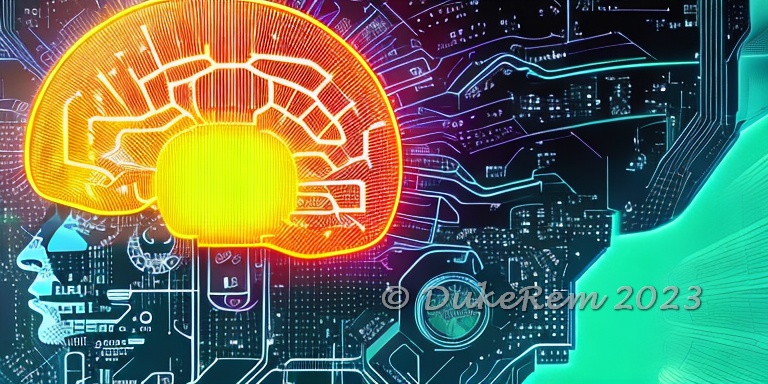
We are receiving several requests to make an insightful article about how GPT works in practice. While not intended for a technical audience, the following will try to explain to newcomers how these Large Language Models (LLM) actually work.
AI has been silently revolutionizing our lives for several years, but recently it has started to become interesting for many people thanks to OpenAI's breakthrough product, ChatGPT.
The most recent iteration is GPT-4, which is the latest development in generative pre-trained transformers (GPT).
GPT-4 is an artificial intelligence model that uses deep learning to produce text similar to human language. It is a chatbot created by OpenAI and based on the fourth generation of GPT.
Deep learning is like studying for an exam; you read, and read, and read until you memorize a subject almost perfectly.
That’s exactly what this type of artificial intelligence does: it “reads” a vast amount of online content, which allows it, based on the input provided by the user, to “guess” which words to put in a row for a plausible answer, even without understanding what it writes.
Hence GPT-4 (like its predecessors), is nothing more than a function that, based on the input it receives, generates an output that "it thinks" is correct (on a statistical basis).
The more information it has, the better it can generate a model that provides better answers. As an example of this approach, Google Photos or Amazon Photos can identify bicycles in images because they have been provided with many (different) images of bicycles. After this training, when you upload a photo to these services, artificial intelligence will look for specific elements in the photo to determine whether it is a bicycle or not.
Besides text, the latest model developed by OpenAI, known as GPT-4, is distinctive because of its capacity to process multimodal inputs comprising both images and text, and generate text outputs accordingly.
To accomplish this feat, it was trained on an enormous amount of textual data from a variety of sources, including but not limited to Wikipedia, Google Books, programming tutorials, and social media posts. However, the Common Crawl dataset accounted for the majority of the information used, and as such, some of the information in the model may not be entirely reliable.
GPT-4, like also chatGPT and all the GPT predecessors, has some limitations, however, that make it potentially harmful in certain situations.
One of these limitations is that it does not understand the meaning or logic behind what it produces, which may lead to inaccuracies or inconsistencies.
It can also exhibit social biases and ethical concerns that reflect the data it was trained on, which could result in offensive or harmful content.
Finally, it (still) has technical constraints that limit its performance and accessibility.
Despite these limitations, GPT models are a remarkable achievement in the field of AI, outperforming other models in various benchmarks (and, sometimes, even humans...).
You can test yourself by using the online platform ChatGPT (for GPT-3.5) or ChatGPT Plus (for GPT-4).