

A new step forward for robotics: DeepMind and MIT pioneer in sports AI | | Generative ai Certification Microsoft | Google ai | Turtles AI
A new step forward for robotics: DeepMind and MIT pioneer in sports AI
AI gets better: ping pong and robotic self-learning
Editorial Team19 August 2024
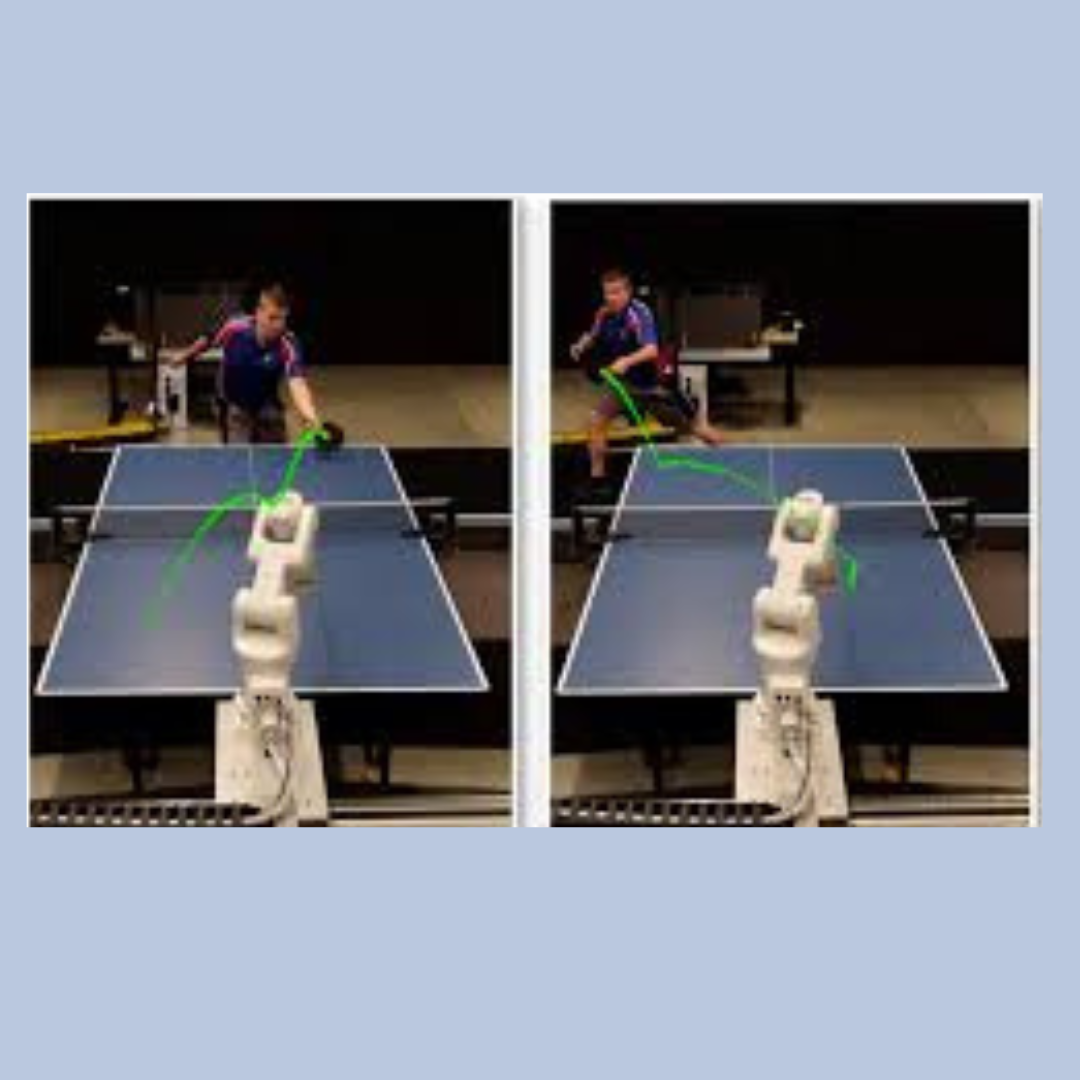
Google DeepMind has developed an AI-powered robot capable of playing ping pong at an amateur human level. The robot demonstrated advanced skills in strategic planning and real-time adaptation. In parallel, MIT has developed an algorithm that allows robots to improve autonomously through practice, tested on Boston Dynamics’ Spot robot.
Key points:
1. Sports skills: DeepMind’s robot excels at table tennis, winning against novice and intermediate human players.
2. Strategy and adaptation: The AI adapts to opponents in real time, improving its performance.
3. Autonomous learning: MIT has created an algorithm that allows robots to perfect themselves through autonomous practice.
4. Future implications: The innovations represent a significant advance for the application of AI in sports robotics and beyond.
Artificial intelligence continues to push new frontiers, and a recent Google DeepMind study represents another step forward in the integration of robotics and sports. The project led to the development of a robot capable of competing in ping pong with amateur-level human opponents, a feat that is not only a technical demonstration but also a laboratory for exploring AI’s planning and adaptive capabilities.
Ping pong, with its demand for quick decision-making, hand-eye coordination and ability to predict the opponent’s moves, was chosen by DeepMind as an ideal testing ground to put the robot through its paces. This was equipped with a 3D-printed racket and faced several opponents, showing a remarkable ability to respond to hits and adapt its strategy. The study, recently published in Arxiv, revealed that the robot won 13 out of 29 matches, achieving complete success against beginners and a 55 percent win rate against intermediate players. However, it is not yet at the level of advanced players, against whom it lost all its matches.
To achieve these results, the DeepMind team developed a hierarchical and modular policy architecture, an advanced technique that allows immediate transition from simulation to reality and real-time adaptation to human opponents. A crucial part of the project was also a user study, which evaluated humans’ enjoyment of playing against the robot. DeepMind’s stated goal is to move ever closer to human speed and performance, a goal that represents an ambitious “north” for the robotics community.
While DeepMind focused on ping pong, another team of researchers from the MIT Computer Science and Artificial Intelligence Lab (CSAIL), in collaboration with The AI Institute, developed an innovative algorithm for self-learning robots. Successfully tested on Boston Dynamics’ Spot robot, this algorithm allows robots to improve their skills through autonomous practice, reducing the need for direct human intervention during the training phase. The learning model adopted has been tested in various scenarios, demonstrating how robots can evolve their skills in dynamic, real-world environments.
The integration of advanced learning techniques and the ability to adapt in real time represent a significant step forward in robotics, suggesting a future in which robots not only perform predetermined tasks, but also learn and improve their performance autonomously. Although DeepMind’s robot is still no match for professional players, the progress achieved in the game of ping pong and MIT’s innovation in self-learning hint at new possibilities for the application of AI in increasingly complex and varied contexts.
Recent findings by DeepMind and MIT highlight how AI is beginning to play increasingly sophisticated and competitive roles, not only in sports but in a wide range of future applications.